Sponsors

Wednesday, September 22, 2010

Governments Who Request or Remove Data About Its Citizens

Google online tool

The Google Transparency Tool

Site:
http://www.google.com/transparencyreport

Per Google:

Transparency is a core value at Google. As a company we feel it is our responsibility to ensure that we maximize transparency around the flow of information related to our tools and services. We believe that more information means more choice, more freedom and ultimately more power for the individual.
We’ve created an interactive map of Government Requests that shows the number of government inquiries for information about users and requests for Google to take down or censor content. We hope this step toward greater transparency will help in ongoing discussions about the appropriate scope and authority of government requests.
Our interactive Traffic graphs provide information about traffic to Google services around the world. Each graph shows historic traffic patterns for a given country/region and service. By illustrating outages, this tool visualizes disruptions in the free flow of information, whether it's a government blocking information or a cable being cut. We hope this raw data will help facilitate studies about service outages and disruptions.

Transparency Report: Government Requests


I used this tool to conduct some quick research and compared the first six months of 2010 data, to all of 2009 requests by governments to either collect information from Google on citizen posted data or to request data to be removed.

Should we be scared? Google's Transparency Tool makes it real and demonstrates that countries keep tabs on what their citizens are doing on the Internet.

The United States leads the list with over 4287 data requests from Google between January 2010 - June 2010.

Google Transparency Report For Government Data Requests on Their Citizens: For the First Six Months of 2010 Compared To All of 2009

The first 6 months of 2010 for 4 of the 5 top governments who request data on their citizens has already exceeded the total number requests they made for the entire year of 2009. See below.


Country

2010 Government Data Requests
2009 Government Data Requests
Change

United States
4287
3580
707
Brazil
2435
3663
-1228
India
1430
1061
136
United Kingdom
1343
1166
177
France
1017
846
171


Google Transparency Report For Government Data Removal Requests of Their Citizens Data: For the First Six Months of 2010 Compared To All of 2009

The number of requests to Google by governments to remove data is also increasing sharply. The United States is due to double the number of requests to remove information by the end of 2009

Country
2009 Data
Removal Requests
2010 Data
Removal Requests
Change
Brazil
291
398
107
Libya

149
149
United States
123
128
5
Germany
188
124
124
Italy
57
69
12
United Kingdom
123
48
-75


Complete list of government who request data from Google or Request that Google remove data.

Country
Data
Removal
China
?

United States
4287
128
Brazil
2435
398
India
1430
30
United Kingdom
1343
48
France
1017
25
Germany
668
124
Italy
651
69
Spain
372
16
Australia
200
14
South Korea
170
38
Argentina
134
12
Taiwan
130
11
Chile
115

Singapore
106

Portugal
73
<10
Belgium
71
<10
Japan
56
7
Turkey
51
5
Hong Kong
50
<10
Switzerland
35
5
Israel
30
4
Austria

2
Canada

<10
Cyprus

<10
Greece

<10
Kazakhstan

<10
Libya

149
Macedonia [FYROM]

<10
Malta

<10
Mexico

<10
Netherlands

<10
New Zealand

<10
Norway

<10
Puerto Rico

<10
Russia

<10
Solomon Islands

<10
Sweden

<10

I applaud Google for providing this tool for transparency purposes. It makes you wonder about the information being gathered or censored. Hmmm.

Enjoy,

Julius


Country


Data


Removal


China


?


United States


4287


128


Brazil


2435


398


India


1430


30


United Kingdom


1343


48


France


1017


25


Germany


668


124


Italy


651


69


Spain


372


16


Australia


200


14


South Korea


170


38


Argentina


134


12


Taiwan


130


11


Chile


115


Singapore


106


Portugal


73


<10


Belgium


71


<10


Japan


56


7


Turkey


51


5


Hong Kong


50


<10


Switzerland


35


5


Israel


30


4


Austria


2


Canada


<10


Cyprus


<10


Greece


<10


Kazakhstan


<10


Libya


149


Macedonia [FYROM]


<10


Malta


<10


Mexico


<10


Netherlands


<10


New Zealand


<10


Norway


<10


Puerto Rico


<10


Russia


<10


Solomon Islands


<10


Sweden


<10


Friday, September 3, 2010

How To Become A CISSP ®


(ISC)2 put of a new video titled:

How To Become A CISSP


I like this video because it is simple to follow and encouraging for the individual who is considering studying for the CISSP exam.

Additionally, if you are seriously considering taking the CISSP exam, visit my top internet ranking blog article:


Enjoy and good luck!

Julius Clark, MBA, MSIS, CISSP, CISA, MCSE

In addition, if you are new to the IT Security field, or have no experience and want to change your career consult with me at:

Monday, August 23, 2010

Why I AM A Member of ISACA

isaca certification

After you watch the following videos you will understand why as an Information Security professional I attained an ISACA certification.

I am a CISA!


Download:
FLVMP43GP


How an ISACA Certification
Can Help Your
Information Security
Career


Enjoy and Study!

Julius


Sunday, August 15, 2010

Credit Card Surcharges & Checkout fees in the Hood


A few months ago I went to a different barbershop to get a haircut; my regular barber was booked up and I really needed a haircut, so I went to one close to my home. After the nice stylish haircut I got, I pulled out my debit card to pay and to my surprise the cashier at the barbershop told me that I would have to pay an additional $2 dollars if I used a credit or debit card. I had no cash on me and had to use my debit card. I was pretty pissed off and swore that I would never do business with that barbershop again, which happens to be a very popular barbershop in Charlotte, NC. For this blog I will leave them nameless.

It was not until I went to another merchant months later; in which they also tacked on an extra surcharge to my purchase that I said enough with this! I am personally going to find out what my rights are as a consumer.

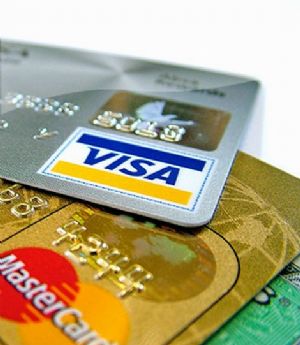
I did a little research and boy was I very pleased to find that these practices are prohibited by most credit card companies. If you fall victim to credit or debit card checkout fees or surcharges you have rights and you should use them. The credit card issuers like VISA, MasterCard and American Express are our allies and will help you.

What Can We Do To Stop This?
All we have to do is pick up the phone or get on the Internet and report them! If the merchant is found out to be violating the terms of using credit card issuers terms they could end up losing their credit and debit card processing privileges and/ or pay fines.

In a nutshell a merchant cannot charge you anymore for a product or service that you would pay with cash if you use a credit or debit card. Now a merchant can offer to give you a discount from normal prices if you pay with cash. I think that is fair.

You see technology has helped many businesses make more money and get sales they would normally loose because technology makes it easy to access your cash or credit 24 hours a day and not have to go to the bank and stand in line to get cash. Some business owners do not get it! Credit and debit cards make you more revenue. Merchants do this because the get charged a very small percentage or flat fee to process the credit or debit card so that the money gets safely transferred into their business bank account. Additionally, I see this happening much to often in urban cites; especially in  Black communities. After reading my blog we can put an end to this ridiculousness!

What is a Checkout Fee?

Photo Credit: VISA.com


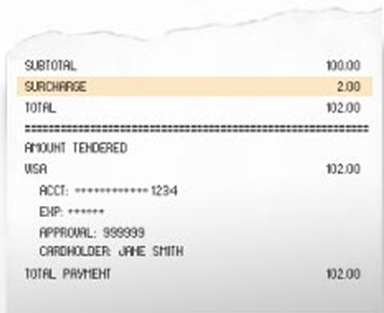
A checkout fee, or payment card surcharge, is an unfair surprise fee that a retailer tacks onto a consumer's bill when he or she uses a credit or debit card. Mastercard & Visa rules do not allow retailers to charge cardholders a checkout fee for using their cards, mirroring laws in 10 U.S. states. See below.

Learn more about Visa & MasterCard Checkout Fees & Rules:

Mastercard Merchant Manual

VISA Warns Consumers about Retailer Checkout Fees

A merchant must not directly or indirectly require any MasterCard cardholder to pay a surcharge or any part of any merchant discount or any contemporaneous finance charge in connection with a MasterCard card transaction. A merchant may provide a discount to its customers for cash payments. A merchant is permitted to charge a fee (such as a bona fide commission, postage, expedited service or convenience fees, and the life) if the fee is imposed on all like transactions regardless of the form of payment used.

    * A surcharge is any fee charge in connection with a MasterCard transaction that is not charged if another payment method is used.

    * The merchant discount fee is the fee the merchant pays to its acquirer to acquire transactions.

A merchant must not require, or post signs indicating that it requires, a minimum or maximum transaction amount to accept a valid MasterCard card.

What to Do if You Are Charged Checkout Fees?

If you run across a merchant who adds on extra charges to use your credit card report them!

Report MasterCard Merchants (See Section Titled: 9.12.3 Minimum/Maximum Transaction Amount Prohibited)
Report VISA Merchants

State No Surcharge Laws Protect Consumers
Consumers who are subjected to checkout fees in states where they are protected by law may report the retailer to their state attorney general's office.

10 States also Protect Consumers with No Surcharge Laws
In 10 states it is prohibited by law for retailers to charge consumers a fee for using a credit card (California, Colorado, Connecticut, Florida, Kansas, Maine, Massachusetts, New York, Oklahoma and Texas). Consumers who are subjected to checkout fees in states where they are protected by law may report the retailer to their state attorney general's office.
Click a state below to read the laws on surcharging and find out where you can go if you suspect a violation.
State Laws & Attorney General Contact InformationCalifornia
  • COLORADO
  • Connecticut
  • Florida
  • Kansas
  • Maine
  • Massachusetts
  • New York
  • Oklahoma
  • Texas
Stop the unfair merchant practices! The economy is already bad enough so saving money from unfair businesses practices is crucial!

Be safe out there being a consumer; peace!

Julius


Friday, August 13, 2010

NASA Turns to Amazon Cloud Services for Light Speed Processing


NASA's Jet Propulsion Laboratory had over 180,000 images from a Saturn mission that they tried to process on their own computer equipment. Well... According to JPL Chief Technology Officer, Soderstrom, it took: 

"It took 15 days, straight 24-by-7 processing, and it still wasn't finished"

To test the hype of Cloud Computing, NASA pulled out a credit card and spun up 60 processors with Amazon Cloud Services.

The following Realization occurred for NASA:
  • Amazon's cloud finished processing it in five hours
  • Total cost of $200.
  • That breaks down to .66 cent per minute of use to process 180,000 images; and anybody can use Amazon Cloud Services if you don't want to own the hardware and just want to rent some computing power.
Since time is money for so many businesses and government agencies it only a matter of time before we see more uses of cloud computing involving critical, confidential or sensitive data.

"That was some real validation for sure."

Though the image processing didn't involve critical mission or sensitive information, Soderstrom says it showed what could be done with cloud computing. And, as JPL works closely with vendors, they developed a comfort level to place more sensitive data on the cloud.

"We have validated that it can be secure if you do it right, and it can certainly save a lot of time and money."

Time, Soderstrom says, is a huge deal:

"It's more than people anticipate, maybe the biggest benefit of all. You don't have to find space in the data center, but you can just rent time.

Blog Source:
http://blogs.bankinfosecurity.com/posts.php?postID=663

Enjoy,

Julius

Google & God's Algorithm

From Wikipedia, the free encyclopedia:

God's algorithm is a notion originating in discussions of ways to solve the Rubik's Cube puzzle, but which can also be applied to other combinatorial puzzles and mathematical games. It refers to any algorithm which produces a solution having the least possible number of moves, the idea being that an omniscient being would know an optimal step from any given configuration.


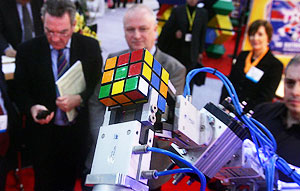
Rubik's Cube

As study using a powerful computers provided by Google and using a complex mathematical  algorithm showed that a Rubik's Cube can be solve from any starting Pattern in 20 moves or less.

The computers crunched through billions of possible cube positions in just a few weeks to determine the maximum number of moves to solve the puzzle.

Research in this area has determined the Rubik's Cube God Number in the Past.

1981 - Researches showed 52 moves would be enough to solve the cube from any pattern.

1992 - Researches showed 37 moves would be enough to solve the cube from any pattern.

Note: The current world record to solve the Rubik's cube is held by Dutch Erik Akkersdijk, who solved the puzzle in 7.08 seconds.

Read Entire Story:

http://videogames.yahoo.com/events/plugged-in/study-uncovers-every-possible-rubik-s-cube-solution/1407748

Peace!

Julius


Sunday, July 25, 2010

Clark Thought Leadership Nominated for the 2010 Black Weblog Awards

I voted to have my blog, Clark Thought Leadership nominated in the 2010 Black Weblog Awards


We will see how this thing goes!

A sincere thank you to those who nominated my blog!

Julius


Friday, July 23, 2010

BDPA Charlotte Fan Page Demographics & Metrics

It will soon be a year since I created the BDPA Charlotte Facebook Fan Page and It has been a great experience for the BDPA Charlotte Chapter and especially for individuals who want to learn more about the BDPA or the Charlotte Chapter of the BDPA.


A Few Facts about the BDPA Charlotte Fan Page:
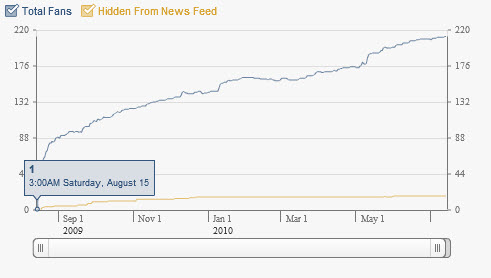
  1. Its the Largest Facebook Fan Page of any BDPA Chapter - at the time of this blog post 217 Fans!
  2. It aggregates the most BDPA News and Information Technology Topics Than any other BDPA Chapter.
  3. Many individuals use the BDPA Charlotte Facebook Fan Page to keep up with National BDPA, BETF Foundation, BDPA Technology Bloggers and News from other BDPA Chapters around the country.


BDPA Charlotte Fan Page Metrics

The BDPA Charlotte Facebook Fan Page has experienced great organic growth since its inception on Saturday, August 15, 2009. See Graph Below.


BDPA Charlotte Fan Page Demographics by:

  • Gender
  • Age
  • Country
  • City


Hopefully you will find the information and service that the BDPA Charlotte Fan Page Provides useful and hopefully makes you consider getting involved with a BDPA Chapter in your city; or reach out to create a BDPA Chapter in your city.

Sincerely,

Julius Clark, MBA, CISSP, CISA


Thursday, July 15, 2010

2010 National BDPA Technology Conference & Job Fair Fact Sheet

 2010 National BDPA Technology Conference & Career Fair Fact Sheet

If your are an IT professional and in need of Technology training or a Job make sure you attend the 2010 National BDPA Technolgy Conference & Career Fair

Date: July 28- July 31
Philadelphia, PA

Follow all 2010 National BDPA Conference News Tweets with this #BDPA #Event trending tracker –Bookmark this! http://bit.ly/cNXo4Z #STEM


Register for Conference Now!


>>> Download Fact Sheet <<<

Conference Fact Sheet 


Tuesday, July 6, 2010

Photocopier Security: We Gave Away Our Privacy to Digital Photocopiers


Question? How many times have you done the following:

  • Copied personal information at Kinko's
  • Used a lawyer who copies documents on a leased copier.
  • Have a healthcare institution that uses photocopiers to copy vital patient information and records.
  • Copied personal information like drivers licenses, social security cards, birth certificates at your place of work.
  • Copied personal document at the public library and stores like OfficeMax, Staples, etc.
How certain are you that the photocopier used to copy your information will be properly cleansed to avoid unauthorized access to your very private information?


CBS New conducted and investigative report into concerns regarding privacy exposure from digital photocopiers.


Summary of CBS Investigative Report

  • Digital photocopiers built since 2002 essentially are computers that scan and print documents. The copiers have a hard drives contain stored scanned images; often of your very personal information.
  • The investigators were able to retrieve tens of thousands of images containing confidential information.
  • The photocopiers never delete the scanned images and the average hard drive size of 30Gig can store hundred of thousand of images containing your personal information.
  • Some copier don't encrypt the images on the hard drive.
  • When the copier lease is up, the images are not necessarily erased returned to the leasing company; the next person that buys the used copier could possibly retrieve these images!
  • You can download free hard drive forensics software from the Internet that easily retrieve the scanned private documents from the hard drive.
This problem is so serious that Massachusetts Representative, Ed Marky sent an open letter to the Federal Trade Commission seeking a government involvement to prevent millions of people from having their personal and confidential information compromised by someone who would get access to a used photocopier.

See actual investigative report


Watch CBS News Videos Online

Consumer Reports Recommendations Lower Risk Due To Photo Copier Hard Drives

Make all copiers securely self-erase files

This threat results from copier manufacturers erring by designing copiers to retain the data they copy. The image of a copied page is needed only temporarily—so users can order additional copies of it without rescanning—and should be automatically erased by the machine when the next copying job is initiated. Dean Gallea, our lead computer tester here at Consumer Reports, emphasizes that the process needs to involve complete and secure erasure that wipes all traces of files from the hard drive. Still, he describes the necessary programming for such auto-erasure as “trivial and minimal” for manufacturers to implement.

Indeed, some copiers are already designed this way. But as an industry spokesman admits in the CBS video, they’re less popular because they cost more—an additional $500 in the case of Sharp copiers, the spokesman says—than regular models. The FTC needs to ensure that all copiers are designed to automatically erase the last file scanned whenever a new copying job is initiated.

Post warnings of the security risk of non-erasing copiers
Since it’s highly unlikely that all such copiers will soon be replaced, copiers that do not provide the security of erasure should be identified, and the risks of using them be identified.

Safeguards are needed when older copiers change hands

Industry and regulators must ensure that hard drives of non-erasing copiers are wiped clean before the copiers change hands. That’s easily done, by requiring the use of erasing software like that we recommend you use before you sell or recycle an old computer. Such programs digitally scrub the hard drive to remove the lingering traces of deleted files. An example is Eraser, a free program.

Copy sensitive documents at home
The copiers that are built into all-in-one printers hold copied data in a buffer, and only long enough to print it once. They offer the best option if you’re leery about copying sensitive data on a commercial machine, especially if and until the copying industry widely distributes more secure machines and better guidelines to protect copied data.

My Suggestions
  • Make copies of your private information when possible at home under your own control.
  • Ask the company, hospital, attorneys office, etc if you can see their policy regarding protecting the privacy of information.
  • Ask if they have a policy to erase or destroy the information on photocopiers after they are returned after the lease is up.
  • Stop using photocopies in public places and at the office to make copies of your personal information; you don't know who else may get access to it via a returned photocopier.
  • Businesses you are at risk for lawsuits if a digital photocopier you leased results in personal information to be compromised and used in nefarious ways; practice your due diligence and guarantee that the copier's hard drives get properly erased or destroyed.

References:

Consumer Reports
  • http://blogs.consumerreports.org/electronics/2010/05/photocopier-privacy-hard-drive-personal-sensitive-information-ftc-inquiry-markey-hackers-identiy-theft.html

CBS News Investigates
  • http://www.cbsnews.com/8301-31727_162-20002992-10391695.html


Get Expert Advice!